
 To successfully create a digital video product design, detailed knowledge of multiplexing, synchronization, and communications protocols are required. Having worked in video product engineering since the earliest days of the digital revolution, we possess a unique specialty in sophisticated video streaming system design. Combining inexpensive yet powerful processors with sophisticated compression algorithms makes digital video affordable in a wide range of applications.
Typical video product development leverages an over the top (OTT) solution or mobile app, involving the streaming of both live and stored content using an adaptive bitrate protocol and digital rights management to protect the content. Our deep experience utilizing the appropriate mix of codecs, streaming protocols, DRM, and encryption standards achieves maximum performance under constrained hardware or networking conditions. Cardinal Peak has guided dozens of household names to successful and profitable product launches.
Video Product Engineering Case Studies
As one of the top streaming video product design firms, Cardinal Peak supports innovative streaming video designs including the projects below. View all our video case studies.
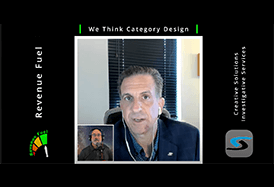
Remote Surveillance Camera System Development: Intel Surveillance
Cardinal Peak partnered with Creative Solutions Investigative Services (CSIS) to pioneer a covert, autonomous intel surveillance system. By engineering custom camera hardware, optimizing power and LTE connectivity, and integrating computer vision AI, we automated footage filtering—helping the client reduce field investigator costs, accelerate litigation evidence delivery, and achieve an astounding 80% profit boost.
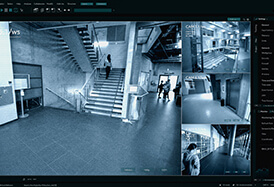
Enterprise AI Video Analytics: Distributed Facility Security
We engineered a large-scale AI video analytics platform for a global telecommunications leader to secure distributed enterprise facilities. By combining custom Person Re-identification (Re-ID) models with a hybrid edge-cloud vision architecture, we enabled seamless trajectory tracking across disconnected camera networks at over 20 corporate locations—delivering scalable digital video product design services without overwhelming cloud bandwidth.
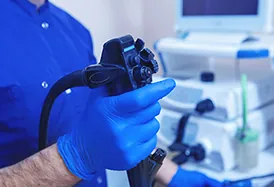
Advancing Medical Diagnoses: Endoscopy Machine Video Capabilities
When a healthcare leader needed to modernize its endoscopy equipment, we provided specialized video product engineering services to enhance diagnostic capabilities. Navigating complex medical device regulations, our team evolved the product architecture to deliver crystal-clear, low-latency video streaming—improving clinical workflows, diagnostic accuracy, and patient outcomes.
Cardinal Peak partnered with Creative Solutions Investigative Services (CSIS) to pioneer a covert, autonomous intel surveillance system. By engineering custom camera hardware, optimizing power and LTE connectivity, and integrating computer vision AI, we automated footage filtering—helping the client reduce field investigator costs, accelerate litigation evidence delivery, and achieve an astounding 80% profit boost.
We engineered a large-scale AI video analytics platform for a global telecommunications leader to secure distributed enterprise facilities. By combining custom Person Re-identification (Re-ID) models with a hybrid edge-cloud vision architecture, we enabled seamless trajectory tracking across disconnected camera networks at over 20 corporate locations—delivering scalable digital video product design services without overwhelming cloud bandwidth.
When a healthcare leader needed to modernize its endoscopy equipment, we provided specialized video product engineering services to enhance diagnostic capabilities. Navigating complex medical device regulations, our team evolved the product architecture to deliver crystal-clear, low-latency video streaming—improving clinical workflows, diagnostic accuracy, and patient outcomes.
Video Product Development Services FAQs
What is video streaming system design?
Video streaming system design services focus on the processing, storage, and delivery of video streams to minimize latency and bandwidth consumption while optimizing the end-user experience. These architectures vary based on scale, ranging from broadcasting few streams to many viewers, to routing many security feeds to a centralized monitoring application.
What does streaming video product design entail?
Streaming video product design services entail developing the physical camera hardware, embedded software, cloud infrastructure, and user-facing applications. The engineering process requires balancing on-device memory and processing—such as using edge AI to detect events—with cloud connectivity to ensure snappy video playback without incurring prohibitive cloud storage costs.
How long does video product engineering take?
Designing, testing, and launching a custom video product typically takes 6 to 9 months, depending on hardware complexity. Video product engineering services must account for whether the development is a new product or a second-generation update, parallel software and hardware engineering efforts, and the time required to achieve regulatory certifications like FCC compliance.
How does computer vision integrate into video product design?
Computer vision transforms a passive video camera into an active, intelligent sensor by deploying machine learning models directly on the device or in the cloud. This edge intelligence enables real-time object detection, anomaly recognition, and workflow automation, allowing the system to transmit only relevant clips and reduce cloud compute costs for digital video product design services.
Video Product Engineering Related Articles
The H.264 Sequence Parameter Set
WebRTC Tutorial for Interactive Video Streaming
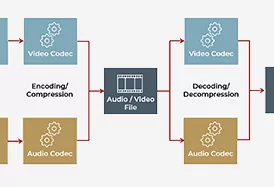
Streaming Media & Video Encoding Formats and Trade-Offs
If you’re working with streaming media, it’s important to understand how different encoding formats and codecs are used to package media so that you can make informed decisions.
If you’re working with streaming media, it’s important to understand how different encoding formats and codecs are used to package media so that you can make informed decisions.